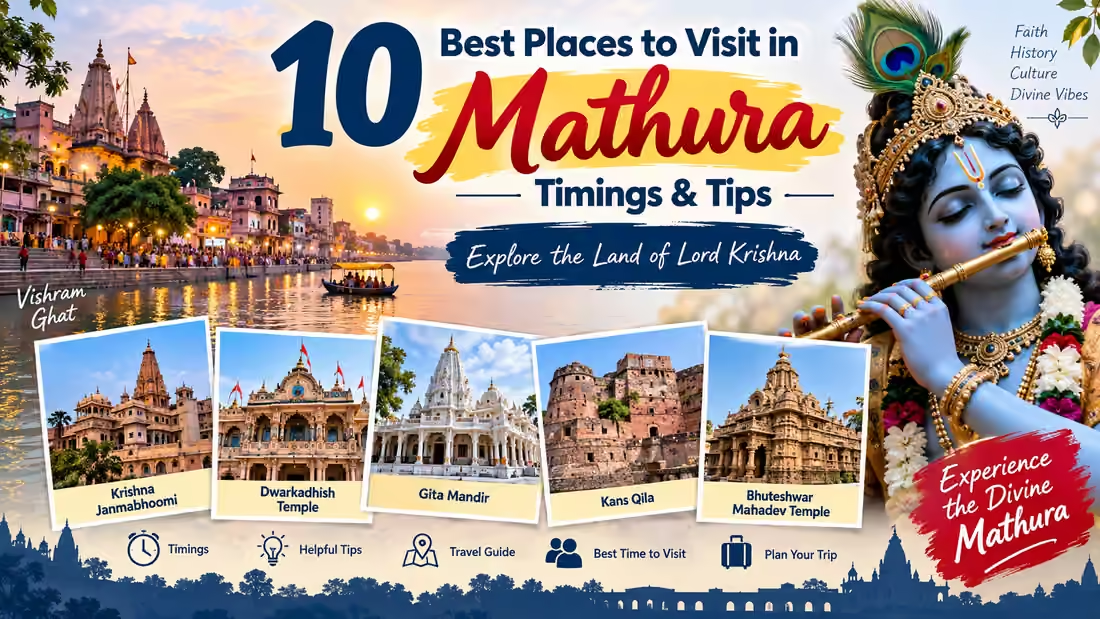
Namaste. I am Rohit, a local guide from Mathura Vrindavan. I was born in this sacred land and have been helping pilgrims for the past 8 years. Every day, I meet people who come to Mathura – the birthplace of Lord Krishna. Some come for a day, some for longer. Some come with a list of temples, some just with faith.
Mathura is one of the seven holiest cities of India. It is older than almost any living city. It has been a centre of faith and art for more than two thousand years. Its temples, ghats and museums hold that long story. To visit Mathura is to stand where Krishna was born, to see the Yamuna he loved lit with the evening aarti, and to walk among sculptures carved when the world was young.
People sometimes rush through Mathura on the way to Vrindavan. I always tell them to slow down. This is where the whole story begins. Bow at the Janmabhoomi where Krishna took birth. Sit at Vishram Ghat for the evening aarti. Give an hour to the museum, where the old Mathura sculptures will take your breath away. Mathura is the elder city; treat it with the honour it deserves.
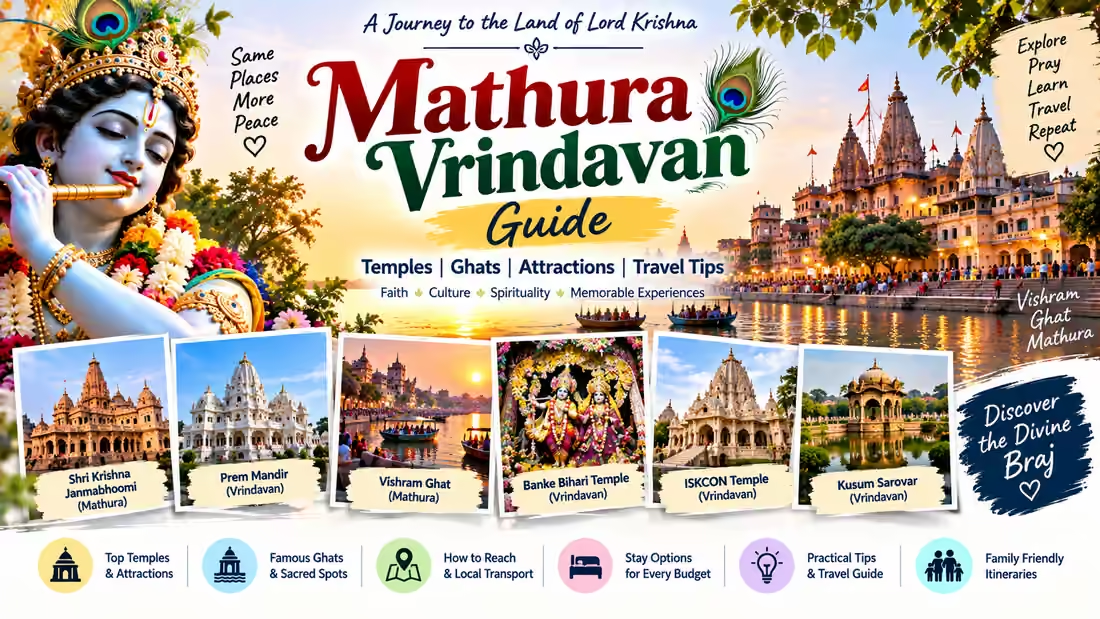
This guide covers the top 10 places to visit in Mathura – in the city and just beyond. Each place is explained simply, with timings and practical tips.
Let us begin.
Top 10 Places at a Glance
| Place | Type | Known For |
|---|---|---|
| Shri Krishna Janmabhoomi | Temple | Krishna's sacred birthplace |
| Dwarkadhish Temple | Temple | The grand, thronged living temple of the city |
| Vishram Ghat | Ghat | The central ghat and the evening Yamuna aarti |
| Government Museum, Mathura | Museum | The famed Mathura school of art |
| Gita Mandir (Birla Mandir) | Temple | The Gita inscribed in marble, quiet gardens |
| Kans Qila | Fort | The ancient riverside fort of Kansa |
| Potara Kund | Sacred tank | The kund by the Janmabhoomi |
| Rangeshwar Mahadev Temple | Temple | An ancient guardian Shiva shrine |
| Gokul | Nearby town | Krishna's infancy, about 15 km |
| Dauji (Baldeo) | Temple | Balarama's temple, about 20 km |
1. Shri Krishna Janmabhoomi
The holiest site in Mathura and the reason pilgrims come. The Shri Krishna Janmabhoomi marks the very place where Lord Krishna is believed to have taken birth.
At its heart is the garbha griha, the sacred prison cell where Devaki gave birth to him. It is a small, deeply charged space where devotees stand in silent devotion. The temple complex holds several shrines and is at its most magnificent at Janmashtami, Krishna's birthday, when it overflows with celebration.
Key Information:
-
Timings: 5:00 AM to 12:00 PM, 4:00 PM to 9:00 PM
-
Security: Strict. Phones, cameras, smartwatches and bags are not allowed inside
-
Recommended time: 1-3 hours
-
Best time: Early morning or evening
-
Dress code: Modest clothing required. No shorts or sleeveless tops
Practical Tips:
-
Arrive before 9:30 AM for shorter queues
-
Leave your phone in the cab – the cloak room queue takes time
-
Weekday mornings are less crowded than weekends
-
VIP entry is on the left side of the main gate
2. Dwarkadhish Temple
The grandest and most thronged living temple in the city. The Dwarkadhish Temple was built in 1814 and honours Krishna in his royal form as Dwarkadhish, the king of Dwarka, rather than the playful child of Vrindavan.
Kept in the Pushtimarg tradition, with its richly carved sandstone, painted ceilings and lively courtyards, it is served through the day on a jhanki schedule of curtained viewings. It is at its most beautiful at the Holi and Janmashtami festivals and the swing festival of Hindola. It sits in the heart of the old city, within walking distance of Vishram Ghat.
Key Information:
-
Timings: Morning and evening darshan. Closed 12:30 PM to 4:00 PM
-
Special: Evening aarti is the main event – one of Mathura's finest
-
Architecture: Rajasthani style with ornate carvings and murals
-
Best time: Morning darshan or evening aarti
What Makes It Special:
The temple is a riot of colour in the Shravan month and Janmashtami, when the idol is dressed in elaborate costumes. If you climb to the top floor observation deck, you can see the colourful rooftops of the whole city.
3. Vishram Ghat and the Yamuna Aarti
The central and holiest of Mathura's twenty-five ghats. Vishram Ghat is the place where Krishna is said to have rested after slaying the tyrant Kansa.
Its marble steps and riverside temples are loveliest at dusk, when the grand evening aarti to the Yamuna is performed. Lamps circling and floating on the water – this is one of the most beautiful sights in all of Braj.
A gentle boat ride from the ghat, with the boatman telling the old stories, is a peaceful way to see the temples from the river. Always agree the fare before you set off.
Key Information:
-
Aarti Timing: Begins approximately 6:15 PM to 7:30 PM (seasonal variation)
-
Best Time: Evening for the aarti. Sunrise for quiet meditation
-
Boat Ride: ₹100 shared, ₹300-₹500 private
-
Distance from Janmabhoomi: 700 metres (walkable)
Practical Tips:
-
Arrive 30 minutes early for ghat-step seating
-
The aarti is free – no tickets needed
-
The aarti is best viewed from a boat or the steps
-
Watch for monkeys near the ghat area
4. Government Museum, Mathura
For a completely different side of Mathura, the Government Museum, established in 1874 in the Dampier Nagar area, is one of India's finest. It is home to the celebrated Mathura school of art.
Here are the great red-sandstone sculptures of the Kushan and Gupta ages, among the masterpieces of ancient Indian art, along with coins, terracotta figures and inscriptions spanning two thousand years. It is the one stop that rewards the historian and the art lover as much as the pilgrim, and it deserves an unhurried hour.
Key Information:
-
Location: Dampier Nagar area
-
Established: 1874
-
Known For: Mathura school of art, Kushan and Gupta sculptures
-
Best for: History and art lovers
-
Closed: Mondays
What to See:
-
Red sandstone sculptures from the Kushan period
-
Ancient coins and terracotta figures
-
One of the largest collections of ancient Hindu sculptures in the world
5. Gita Mandir (Birla Mandir)
A serene modern temple built by the Birla family on the Mathura-Vrindavan road. The Gita Mandir is known above all for the entire Bhagavad Gita inscribed on its pillars and walls – the Gita Stambha.
Set in landscaped gardens, with fine marble and red sandstone and images of Krishna and Radha, it is a peaceful place for reflection away from the crowded old city and a lovely stop on the way between Mathura and Vrindavan.
Key Information:
-
Location: Mathura-Vrindavan Road
-
Known For: Entire Bhagavad Gita inscribed on pillars
-
Atmosphere: Peaceful, quiet gardens
-
Best time: Morning or late afternoon
6. Kans Qila
On the bank of the Yamuna stands the old Kans Qila, the fort linked in name and legend to Kansa, the tyrant king of Mathura whom Krishna came to overthrow.
Though weathered by the centuries, the fort carries the deep history of the city and offers quiet views over the river. It is a stop for those drawn to the ancient story of Mathura beyond its temples.
Key Information:
-
Location: Near Vishram Ghat on the Yamuna
-
Known For: Ancient fort of Kansa
-
Atmosphere: Ruined, historical, quiet
-
Best for: History buffs and those seeking views
7. Potara Kund
Close to the Janmabhoomi lies Potara Kund, a large, ancient stepped tank held sacred as the place where the baby Krishna's clothes (his potre) were washed.
Ringed by steps and small shrines, restored in red sandstone, it is a serene and lesser-visited spot that connects directly to the earliest moments of Krishna's life and pairs naturally with a visit to the birthplace.
Key Information:
-
Location: Near Janmabhoomi
-
Significance: Where baby Krishna's clothes were washed
-
Atmosphere: Serene, historic, peaceful
-
Best time: After Janmabhoomi visit
8. Rangeshwar Mahadev Temple
Mathura is guarded, by old tradition, by four ancient Shiva temples at its four corners. The Rangeshwar Mahadev temple in the south is among the most revered of them.
A reminder that Shiva himself watches over Krishna's city, it is a peaceful, atmospheric shrine, busy on Mondays and at Mahashivratri and a meaningful stop for those who honour Mahadev alongside their Krishna darshan.
Key Information:
-
Location: South Mathura
-
Dedication: Lord Shiva
-
Significance: Guardian temple of Mathura
-
Busy days: Mondays and Mahashivratri
9. Gokul – About 15 km
Just across the Yamuna from Mathura, Gokul is the village of Krishna's infancy, where the baby Krishna was raised in secret in the home of Nanda and Yashoda.
The Gokul temple and the soft sands of Raman Reti nearby are gentle, deeply loved spots, quieter than the temple city and rich in the earliest of the leelas.
Key Information:
-
Distance from Mathura: About 15 km
-
Significance: Krishna's infancy, home of Nanda and Yashoda
-
Key Sites: Gokul Temple, Raman Reti, Brahmand Ghat
-
Atmosphere: Quiet, deeply devotional, less crowded
Why Visit:
Gokul is where the intimate childhood pastimes of Krishna took place. Standing in the home where Krishna played, where Yashoda tied him, and where he performed his early miracles is a deeply touching experience for devotees.
10. Dauji – Baldeo (About 20 km)
A little off the usual trail, the Dauji temple at Baldeo honours Balarama, Krishna's elder brother, worshipped here as Dauji.
A beloved, less crowded temple with its own great fair, it rewards those who seek the quieter, older corners of the Mathura region and completes the round of Krishna's own family in Braj.
Key Information:
-
Distance from Mathura: About 20 km
-
Dedication: Balarama (Krishna's elder brother)
-
Significance: One of the main temples of Balarama in Braj
-
Atmosphere: Peaceful, less crowded, deeply devotional
Just Beyond Mathura – The Wider Braj
Mathura is the gateway to the whole of Braj. Most visitors extend their trip to the sacred sites all around it.
Vrindavan (about 14 km): The twin city of Krishna's childhood, with Banke Bihari, Prem Mandir, ISKCON and the mysterious grove of Nidhivan. Almost always visited together with Mathura.
Govardhan (about 22 km): The sacred hill Krishna lifted, circled by pilgrims on the parikrama.
Barsana and Nandgaon (about 45-55 km): The villages of Radha and Krishna, magnificent at Radhashtami and the Lathmar Holi.
How Many Days You Need
One Day: Mathura's own top sights – the Janmabhoomi, Dwarkadhish, Vishram Ghat, the museum and a temple or two more – fill a comfortable day.
Two Days: Let you add Vrindavan, its twin city just 14 km away, for the fuller Krishna pilgrimage of the twin cities together.
Three or More Days: Open the wider Braj of Gokul, Govardhan, Barsana and Nandgaon, at a relaxed and unhurried pace.
How to Get Around Mathura
Mathura is compact and easy to explore.
- By E-Rickshaw and Auto: Small electric rickshaws and autos are the mainstay, threading the old-town lanes cheaply. Agree the fare first, as first-time visitors are often quoted high.
- On Foot: The old-city cluster of Dwarkadhish, Vishram Ghat and the ghats is best walked, the lanes full of temples, sweet shops and colour.
- By Car for the Wider Sites: For Gokul, Dauji and the wider Braj and to link Mathura with Vrindavan, a car is the most flexible. The old-town lanes, though, are for e-rickshaws and feet.
- From Mathura Junction to the City: Autos and e-rickshaws are available right outside the station. A reserved auto to the Janmabhoomi area costs ₹100-₹150. Shared autos are cheaper.
Best Time to Visit and Tips
- Season: October to March is the most pleasant season, with cool weather for the temples, the museum and the ghats.
- Festival Season: Holi in February-March and Janmashtami in August-September are Mathura's greatest festivals. Magnificent but very crowded. Book and plan far ahead for those dates.
- Daily Timing: See the Janmabhoomi and Dwarkadhish in the morning. Keep the museum for the day. Visit Vishram Ghat for the evening aarti.
- Dress Modestly: Cover shoulders and knees. Remove footwear as required.
- Watch for Monkeys: Keep belongings close near the ghats and temples.
Conclusion
Mathura is not just a city. It is the beginning of the Krishna story. This is where the divine took birth. This is where the tyrant Kansa fell. This is where the Yamuna flows, carrying prayers and lamps every evening.
Visit the Janmabhoomi with reverence. Walk to Vishram Ghat and watch the aarti. Spend time at the museum, where ancient sculptures tell stories of a time long past. And when you are done, do not rush away. Stay a little longer. Walk through the old lanes. Taste the peda. Let Mathura speak to you.
Plan your visit around the temple hours. Morning and evening for darshan. Midday for rest and the museum. Respect the dress code. Keep your phone away at Janmabhoomi. Trust no one offering VIP darshan.
Mathura is the elder city. Treat it with the honour it deserves.
Jai Shri Krishna.