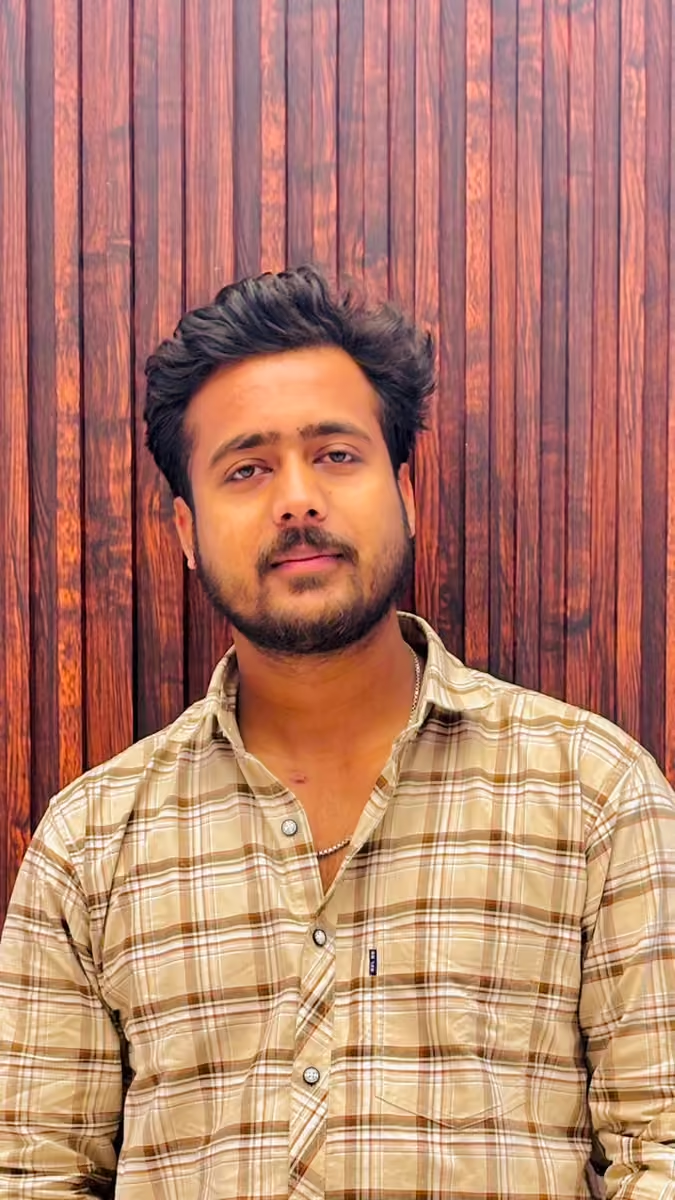
Namaste. I am Rohit, a local guide from Mathura Vrindavan. I was born and brought up here. For the past 8 years, I have been helping pilgrims visit these sacred cities. Every week, I meet first-time visitors. They come with questions, excitement, and sometimes confusion. How do I start? Where do I go? What should I book first? These are common questions.
This guide is for first-time visitors. I have kept it simple and practical. It covers everything you need to know. The best time to visit. How many days you need. How to reach. Where to stay. What to expect. And common mistakes to avoid. If you are planning your first Mathura Vrindavan trip, read this guide carefully. It will save you time, money, and stress.
Let us begin.
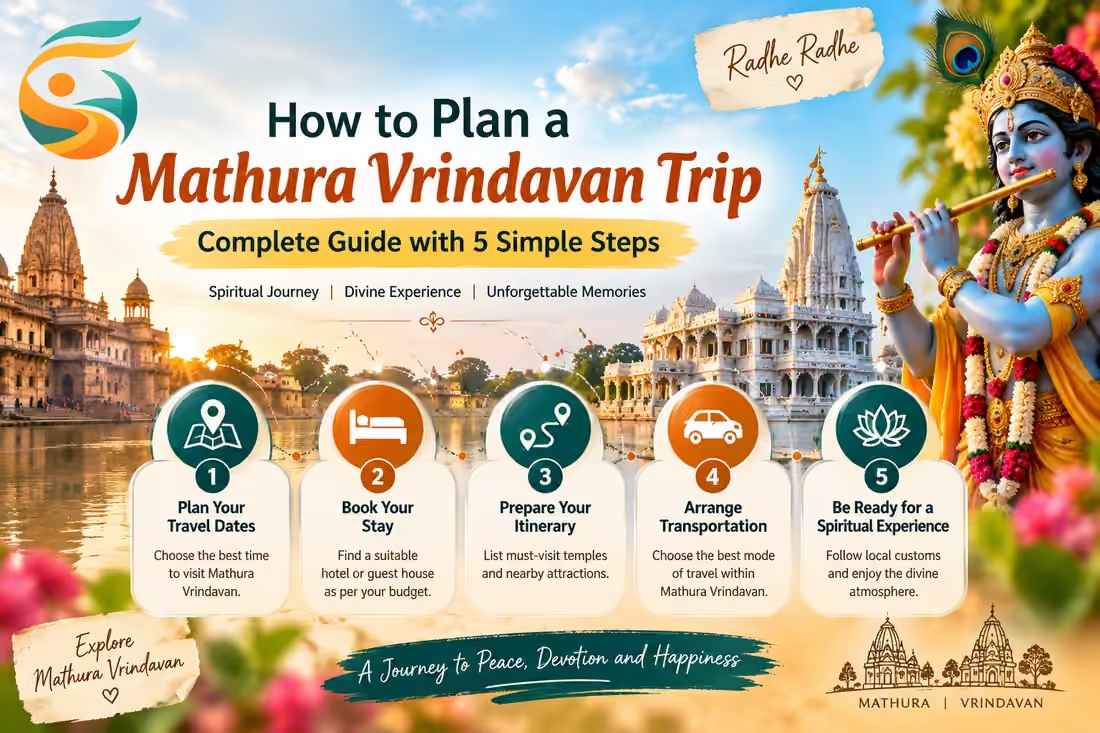
The Method at a Glance
| Decision | The Short Answer |
|---|---|
| 1. When | October to March, midweek beats weekends, festivals need lead time |
| 2. How Long | Two days for the core, three for the Braj circuit, one day from Delhi |
| 3. How to Reach | Road from Delhi, train to Mathura Junction, flight to Delhi from afar |
| 4. Where to Stay | Area by trip type – Chhatikara for cars, Raman Reti for devotion, old town for atmosphere |
| 5. DIY or Package | DIY if logistics excite you, package if darshan is the point |
Read More: Same Day Mathura Vrindavan Tour from Delhi
Why Visit Mathura and Vrindavan
Mathura is the birthplace of Lord Krishna. Vrindavan is where Krishna spent his childhood and performed divine pastimes. Together, they form the heart of Braj – the sacred land of Krishna.
For devotees, visiting these cities is more than a trip. It is a spiritual journey. Standing at Janmabhoomi, the place where Krishna was born. Walking through the lanes of Vrindavan, where he played and danced with the gopis. Sitting at Vishram Ghat, where he rested after slaying Kansa.
These experiences are powerful. They connect you to the stories you have heard since childhood. They make the scriptures come alive.
That is why millions of pilgrims visit Mathura and Vrindavan every year. And that is why you should plan your visit well.
Read
The Best Time to Visit
The Ideal Window
The best time to visit Mathura and Vrindavan is from October to March. The weather is pleasant. You can walk comfortably between temples. Crowds are manageable on weekdays.
What Each Season Feels Like
- Winter (December to February): Mornings are cold, around 4-6°C. Days are pleasant, around 16-20°C. Temple queues are shorter. This is the most comfortable time for walking. Carry a jacket for morning darshan.
- Spring (February to March): Temperatures start rising. But this is also Holi season. Vrindavan during Holi is unforgettable. But it is also very crowded. If you want to see Holi, book well in advance.
- Summer (April to June): It gets very hot. Temperatures reach 40-46°C. Temple visits should be limited to early morning and evening. AC cab and hotel become essential. Fewer tourists, but the heat is demanding.
- Monsoon (July to September): The region becomes green and lush. But the lanes get muddy. Janmashtami falls in this season. This is the biggest festival in Mathura, with huge crowds.
Weekends vs Weekdays
Weekends are very busy. Delhi NCR treats Vrindavan as its weekend getaway. Temples have longer queues. Hotels are more expensive. Weekdays, especially Tuesday to Thursday, are quieter. If you can, visit on weekdays.
Festivals to Consider
Two festivals attract the biggest crowds:
-
Holi (February-March) – Famous throughout the world
-
Janmashtami (August-September) – Krishna's birth celebration
If you plan to visit during a festival, book everything at least 2-3 months in advance.
How Many Days You Need
One Day – From Delhi
One day is possible. You can leave Delhi early morning and return late at night. You will cover the main temples. But it will be rushed. You will not have time to sit and absorb the atmosphere.
Two Days – The Sweet Spot
Two days is perfect for most first-time visitors. You can give one full day to Vrindavan and one full day to Mathura. No rushing. Time to sit at each temple. Time to experience the evening aarti. This is what I recommend for most pilgrims.
Three Days – The Full Braj Experience
Three days allows you to add Gokul, Govardhan, and Barsana. These are important places in Krishna's story. Gokul is where he was raised. Govardhan is the hill he lifted. Barsana is Radha's hometown.
Four or Five Days – Unhurried Pilgrimage
If you have more time, you can explore deeper. Visit smaller temples. Do the Govardhan parikrama. Spend a day in Nandgaon. Take a boat ride on the Yamuna. Visit Agra for the Taj Mahal.
How to Decide
Ask yourself this question: What is the purpose of my trip?
If you just want to see the main temples, 2 days is enough. If you want to experience the spiritual atmosphere, 3 days is better. If you want a complete pilgrimage, take 4-5 days.
Read More: 2 Days Mathura Vrindavan Tour Package
How to Reach Mathura and Vrindavan
From Delhi – The Most Common Starting Point
- By Road: The Yamuna Expressway connects Delhi to Mathura. Distance is 160 km. Travel time is 2.5 to 3 hours on a good day. But Friday evenings and Sunday evenings have heavy traffic. Add an extra hour.
- By Train: There are 20+ daily trains from Delhi to Mathura Junction. The fastest is Vande Bharat Express – 1.5 hours. Other trains take 2-2.5 hours. This is the most budget-friendly option.
- By Bus: Volvo buses run from ISBT Kashmere Gate and Sarai Kale Khan. Travel time is 3-4 hours. Fares are ₹300-₹500.
From Other Cities
- From Mumbai, Chennai, Bangalore: Take a flight to Delhi. Then take a cab or train to Mathura. Direct trains are also available from these cities but take 24-36 hours.
- From Jaipur, Agra: Road is the best option. Agra to Mathura is 65 km, about 1.5 hours. Jaipur to Mathura is 220 km, about 4 hours.
- From Kolkata, Hyderabad: Train to Mathura Junction is the best option. Book in advance for confirmed seats.
From Mathura Junction to Vrindavan
Mathura Junction is 12 km from Vrindavan. Travel time is 30-45 minutes.
Options:
-
Shared auto – ₹50-₹100 per person
-
Reserved auto – ₹250-₹450
-
Private taxi – ₹500-₹900
-
E-rickshaw – slower but cheap
Always agree on the fare before you sit. Station quotes are often inflated.
Important Tip
Most first-time visitors do not know that private cars cannot reach Banke Bihari Temple directly. You have to park at the main road and take an e-rickshaw or walk. Keep this in mind when planning.
Where to Stay
Your stay area depends on your travel style. Here is a simple guide.
Near Banke Bihari (Old Town)
- Best for: Pilgrims who want to be close to the main temple
- Price: ₹800-₹2,500 per night
- Pros: Walking distance to Banke Bihari
- Cons: Narrow lanes, car cannot reach directly
This area has small hotels and guesthouses. Good for those who plan to walk everywhere. Not recommended if you have elders or heavy luggage.
Near Prem Mandir (Raman Reti Area)
- Best for: Families and senior pilgrims
- Price: ₹2,000-₹4,500 per night
- Pros: Wider roads, modern hotels, AC, lift access
- Cons: Slightly away from old town
This is the most comfortable area. Good hotels with all facilities. Easy for cars to reach. Recommended for families with elders or children.
Near ISKCON Temple
- Best for: Devotees and peace seekers
- Price: ₹500-₹1,500 per night
- Pros: Peaceful atmosphere, ISKCON guesthouse option
- Cons: Away from Banke Bihari
ISKCON guesthouse is clean, organized, and affordable. Meals are sattvic and included. Good for solo travellers and devotees.
Near Chhatikara Road
- Best for: First-timers with a car
- Price: ₹1,000-₹3,000 per night
- Pros: Good hotels, easy car access
- Cons: Outside the temple belt
Many good budget and mid-range hotels are on this road. Easy to find and park. Good for those driving from Delhi.
Dharamshalas and Ashrams
- Best for: Budget pilgrims
- Price: ₹500-₹1,000 per night
- Pros: Cheapest option, simple rooms
- Cons: Basic facilities, shared bathrooms
Vrindavan has many dharamshalas. They are run by temples and trusts. Clean and affordable. Good for pilgrims on a tight budget.
Mathura or Vrindavan?
If temples are your focus, stay in Vrindavan. It is closer to most temples. If train convenience matters, stay in Mathura. But then you will need transport to Vrindavan every day. Most pilgrims prefer Vrindavan.
Read More: 3 Days Mathura Vrindavan Tour Package
What to Pack
Packing for Mathura Vrindavan is different from a regular trip. Here is what you need.
Clothes
-
Modest clothes: Shoulders and knees must be covered. No shorts or sleeveless tops.
-
Cotton kurtas: Comfortable for temple visits
-
Scarf or dupatta: For women, to cover head if needed
-
Jacket or sweater: For winter months (December to February)
-
Comfortable shoes: You will walk a lot. Temple floors are often marble and slippery.
Other Essentials
-
Sunscreen: For summer visits
-
Hat or cap: For sun protection
-
Water bottle: Carry your own for hydration
-
Cash: Many auto and e-rickshaw drivers do not accept UPI
-
ID proof: Needed for hotel check-in and Janmabhoomi entry
-
Small bag: For keeping your essentials during temple visits
What Not to Carry
-
Electronics inside Janmabhoomi: No phones, smartwatches, or cameras inside
-
Expensive jewellery: Keep it simple
-
Large bags: Most temples have no cloakrooms (except Janmabhoomi)
A Tip from Experience
Carry a small shoulder bag for temple visits. Keep your phone, wallet, and water in it. Leave large bags and luggage at the hotel. This makes darshan much easier.
What to Expect at Temples
The Atmosphere
Temples in Vrindavan are different from city temples. They are crowded, devotional, and full of energy. People chant "Radhe Radhe" everywhere. There are queues, but they move quickly.
Key Temple Rules
Dress code is strict. Shoulders and knees must be covered. At Janmabhoomi, security turns away people in shorts. No exceptions.
Photography is not allowed inside. Banke Bihari and Janmabhoomi strictly prohibit it. You will be asked to leave if caught.
No electronics inside Janmabhoomi. All phones, smartwatches, and cameras go to the cloak room. There is a queue for this. Arrive early to avoid the rush.
Bells and conch are not allowed. At Banke Bihari, no bells or conch are used. Only chanting of "Radhe Radhe."
The Queue Reality
Morning darshan is less crowded than evening. Weekdays are better than weekends. If you arrive at Banke Bihari at 9:00 AM on a Saturday, expect a long queue. Arrive at 7:45 AM for a quick darshan.
VIP Darshan – Does It Exist?
There is no paid VIP darshan at Banke Bihari. There is a separate entrance, but it is free. Anyone offering a "VIP pass" is a tout. Do not pay them. Darshan is free for everyone.
The Curtain Darshan
At Banke Bihari, the curtain opens and closes every 2-4 minutes. You get brief glimpses of the deity. This is normal. Do not be surprised. It is part of the tradition.
Dealing with Crowds
On festival days, crowds can be huge. Janmashtami and Holi see lakhs of devotees. Be prepared for long waits. Keep elderly and children close. Carry water and snacks.
Monkeys
Monkeys are common in Vrindavan, especially around Nidhivan and Banke Bihari. Keep your phone, spectacles, and bags secure. Do not feed them. They can snatch things quickly.
Common Mistakes First-Timers Make
1. Booking Hotel Before Planning Dates
This is the most common mistake. People book a hotel, then plan everything else. But the area depends on your trip type. The trip depends on your dates. Dates should come first.
2. Arriving in the Afternoon
Temples close in the afternoon (12:30 PM to 5:00 PM). If you arrive at 2:00 PM, you cannot visit temples. Your first darshan will be in the evening. Plan to arrive early morning or late evening.
3. Planning Too Many Temples in One Day
Eight temples in one day sounds good on paper. In reality, it is exhausting. You rush from one place to another. You do not feel anything. Three to five temples with real time at each is much better.
4. Trusting Google Maps Time from Delhi
Google Maps shows 2.5 hours from Delhi to Mathura. On a Friday evening, it takes 4+ hours. NCR traffic is real. Winter fog also adds time. Keep buffer.
5. Not Checking Festival Calendar
Many people arrive and discover it is a festival. The city is crowded. Hotels are full. Queues are long. Festivals are wonderful if you plan for them. But discovering one on arrival is overwhelming.
6. Paying for VIP Darshan
There is no VIP darshan at Banke Bihari. Anyone offering it is a tout. Darshan is free. Do not pay.
7. Staying in Delhi on Day 1 Night
This is a mistake for 2-day trips. People do Mathura on Day 1, return to Delhi, come back on Day 2. By the time they reach Vrindavan, Banke Bihari's morning darshan is over. Stay in Vrindavan or Mathura overnight.
8. Not Carrying Cash
Many e-rickshaw and auto drivers do not accept UPI. Street vendors and small shops also prefer cash. Carry enough cash for the day.
9. Wearing Inappropriate Clothes
At Janmabhoomi, people in shorts are turned away. No exceptions. Carry modest clothes. A cotton kurta works well.
10. Overpacking
Large bags are difficult to carry in temple queues. Pack light. Keep a small day bag for temple visits.
Budget Guide
Accommodation Costs
| Type | Price per Night |
|---|---|
| Dharamshala / Ashram | ₹500-₹1,000 |
| Budget Hotel | ₹800-₹1,500 |
| Mid-Range Hotel | ₹1,500-₹3,000 |
| Premium Hotel | ₹3,000-₹5,000 |
Transport Costs
| Type | Cost |
|---|---|
| Delhi to Mathura (Train) | ₹100-₹800 per person |
| Delhi to Mathura (Cab) | ₹2,500-₹4,000 one way |
| Mathura to Vrindavan (Shared Auto) | ₹50-₹100 per person |
| Mathura to Vrindavan (Reserved Auto) | ₹250-₹450 |
| E-rickshaw inside Vrindavan | ₹20-₹40 per ride |
| Yamuna Boat Ride | ₹100 (shared) / ₹500 (private) |
Food Costs
| Type | Cost per Person |
|---|---|
| Simple thali at local eatery | ₹80-₹120 |
| Mid-range restaurant | ₹150-₹300 |
| Premium restaurant | ₹300-₹500 |
| Street food (kachori, jalebi) | ₹30-₹80 |
Temple Costs
All temples are free to enter. There are no entry fees.
Total Budget for 2 Persons (2 Days)
| Type | Budget | Mid-Range |
|---|---|---|
| Transport (Delhi round trip) | ₹4,000-₹5,000 | ₹6,000-₹8,000 |
| Hotel (2 nights) | ₹1,600-₹3,000 | ₹4,000-₹8,000 |
| Food (2 days) | ₹800-₹1,200 | ₹1,500-₹3,000 |
| Local transport | ₹200-₹400 | ₹400-₹800 |
| Total | ₹7,000-₹10,000 | ₹13,000-₹22,000 |